Let me ask you something — when was the last time you looked at your plate and saw color? Not a piece of parsley or a slice of tomato on a sandwich, but real, vivid, natural color?
If you’re like most people, your plate probably looks more toward beige than bright. Toast in the morning. Pasta or a sandwich for lunch. Maybe some chicken and rice for dinner. Beige. White. Maybe a pop of green if you add a salad. And I get it — life is busy. We grab what’s quick and easy. What fills us. What makes the kids stop asking, “What’s for dinner?”
But here’s the truth most of us were never really taught: food is more than fuel. Food is information. It tells your body how to function, how to heal, how to fight, and how to grow. And one of the simplest, most powerful ways you can start sending the right signals to your body?
Eat the rainbow.
Why Color Matters in Your Food
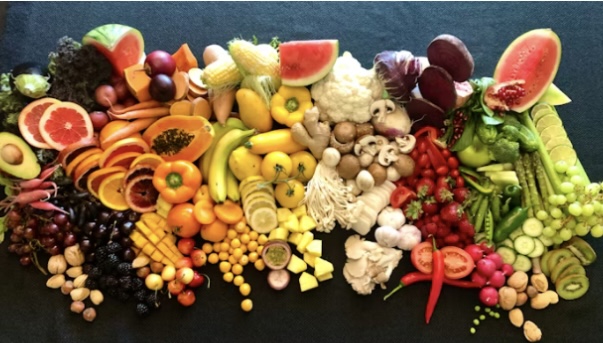
No, I’m not talking about candy or artificially colored cereal. I’m talking about the color that comes straight from the Earth — the deep reds of strawberries and tomatoes, the vibrant oranges of carrots and sweet potatoes, the rich purples of blueberries and eggplants.
Each color in plant foods represents different phytonutrients, which are natural chemicals that help protect plants — and us — from harm. These are not just “nice-to-haves.” They’re essentials, especially if you’re struggling with energy, immunity, digestion, or mental clarity.
Let’s break it down by color. You’re about to meet your new favorite health allies.
🔴 RED: The Protectors
Think tomatoes, strawberries, cherries, red bell peppers, and even red cabbage.
Red foods are rich in lycopene, anthocyanins, and vitamin C, which have been linked to:
- Heart health 🫀
- Lower cancer risk
- Skin protection from sun damage
- Reduced inflammation
I remember a time when I had zero energy. Every afternoon, I’d crash around 2 PM, and I chalked it up to “getting older.” But what I learned was that I wasn’t giving my body the tools to protect itself from stress — both the physical kind and the emotional kind. Once I started adding things like roasted red peppers, cherry tomatoes in my salads, and frozen cherries to my smoothies, I noticed a shift.
It was like my body said, “Thank you. Finally.”
🟢 GREEN: The Builders
Spinach, kale, broccoli, Brussels sprouts, avocados, green apples, kiwi — these are your detox warriors and energy boosters.
Greens are high in:
- Chlorophyll, which helps cleanse your liver and blood
- Folate, essential for brain and mood health
- Fiber, for healthy digestion and blood sugar balance
- Vitamin K, for bone strength and blood clotting
Here’s the problem many of us face: we’re bloated, sluggish, and moody — and we think it’s just normal. We drink more coffee. We skip meals. We blame our hormones. But what we really need is to flush out what’s not serving us and rebuild from the inside out.
Try this: Add one big handful of greens to one meal a day. That’s it. One handful. Smoothies, soups, omelets, sandwiches — it all counts.
Over time, you’ll start to feel less foggy. Less tired. And that afternoon slump? It fades.
🟠 ORANGE/YELLOW: The Healers
Carrots, mangoes, oranges, butternut squash, bell peppers, turmeric. These foods are rich in beta-carotene, vitamin C, and flavonoids.
They help with:
- Immune function
- Skin and eye health
- Collagen production
- Wound healing and tissue repair
I had a friend recovering from surgery, and her doctor said, “Eat orange.” Not just because it’s vibrant, but because those nutrients help rebuild cells. You don’t have to be recovering from something major to benefit. Think about how your skin breaks out, your nails feel brittle, your hair sheds in the shower.
You’re not falling apart — your body is just missing what it needs to repair itself.
🔵 PURPLE/BLUE: The Protectors of Your Mind
Blueberries, blackberries, eggplant, purple cabbage, plums, and grapes.
These are your brain foods. They contain anthocyanins, which are powerful antioxidants that help:
- Fight free radicals (those pesky things that cause aging and disease)
- Improve memory
- Support mental clarity
- Lower inflammation
When I was in a particularly stressful season of life, my sleep was awful and my mind was always racing. I felt like I was on edge constantly. I started adding blueberries to breakfast and snacking on purple grapes in the afternoon. A small change — but the nutrients helped reduce internal stress and support my nervous system.
Food can’t remove your stress, but it can help you carry it better.
🤍 WHITE/BROWN: The Silent Heroes
Cauliflower, garlic, onions, mushrooms, parsnips, bananas.
These foods often get overlooked, but they offer:
- Antibacterial properties (especially garlic and onions)
- Immune-boosting support
- Fiber and potassium
- Cancer-fighting compounds like allicin
Don’t underestimate the power of humble foods. Garlic is basically nature’s antibiotic. Mushrooms can regulate your immune response. Bananas help with muscle recovery and digestion.
Sometimes, the quietest foods are doing the loudest work behind the scenes.
So… Why Aren’t We Eating the Rainbow?
Honestly? Because it’s hard.
It’s easier to reach for what’s fast and familiar. Many of us grew up in households where vegetables were boiled to death or came from a can. We associate healthy food with punishment or blandness.
But eating the rainbow isn’t about being perfect. It’s not about never touching pizza or saying goodbye to brownies. It’s about creating balance. It’s about helping your body help you.
And here’s the part no one tells you: It’s fun.
Once you start noticing color, you want more of it. You look at a plain sandwich and think, “How can I brighten this up?” You begin to notice how vibrant meals make you feel — energized, alive, present.
How to Start — Even If You’re Busy, Broke, or Burned Out
Let’s make this realistic. No fancy recipes or expensive ingredients. Here are some easy ways to get started:
1. Smoothie Power
Toss in spinach (green), banana (white), frozen mango (orange), and blueberries (blue). Boom — four colors, one cup.
2. Colorful Snack Plates
Cut up red bell peppers, carrots, cucumbers, and throw in some hummus. Easy lunch or after-school snack.
3. Add One Color Per Meal
You don’t need the full rainbow every time. Just aim to add one new color to each meal.
4. Frozen and Canned Are Fine
Frozen berries, canned beans, pre-chopped veggies — they still have plenty of nutrients. Don’t let perfection stop you.
5. Involve the Kids
Let them pick a new fruit or veggie at the store. Make it a game: “Can we eat 5 colors today?”
Your Body is Listening
If you’ve felt out of balance lately — tired, bloated, moody, foggy, or just off — your body might be trying to tell you something.
Not that you’re broken. Not that you need to go on a diet. But that it needs support. It needs information. It needs color.
Start where you are. Don’t overhaul everything overnight. Just add one color today. One extra veggie. One handful of berries.
And tomorrow? Do it again.
Small steps, repeated daily, create transformation. Not just in how you look, but in how you live, how you love, how you show up for the people who count on you — and for yourself.
Let’s Build a Rainbow, One Bite at a Time
If this resonated with you, I want you to remember: food is not the enemy. Food is one of the deepest forms of self-respect. Choosing color is choosing vitality. It’s choosing to give your body what it needs to show up — even when life is messy and chaotic.
So next time you look at your plate, ask yourself:
“Where’s the rainbow?”
Your energy, your healing, and your future may depend on the answer.